Echo360 Link to stream this seminar
Zoom link to participate in Q&A at the end of the seminar
About the seminar:
Per- or polyfluoroalkyl substances (PFAS) find utility in myriad applications, from rain gear, to food packaging, to cosmetics, to the 3 nm features of semiconductor devices, to the refrigerants of the green revolution, to lifesaving aqueous film forming (or firefighting) foam. This ubiquity leads to a pervasive waste problem: discarded forever chemicals are dispersed across the environment and sequestered inside at least 98% of us. Residual aqueous film forming foam (AFFF) and municipal waste-derived biosolids are the two most concerning sources of PFAS in the environment, though the precursor consumer and pharmaceutical materials in municipal waste are not far behind.
The question is can we efficiently extract PFAS from the environment and safely convert them into reusable fluorine sources without generating toxic or long-term greenhouse gas side products?
Strong C-F bonds are the heralded attribute associated with silicon etching and fire suppression, but the yin and yang of hydro- and lipophobicity dominate their role in consumer products, biological activity, and the fire suppression of AFFF. PFAS mineralization is actually exothermic (the H-F bond surpasses the C-F bonds in strength) – the challenge is kinetic.
Quantum mechanical and kinetic computational studies on tailoring decomposition pathways of the major classes of PFAS toward mineralization will be summarized, and compared to shock tube, syncotron, and full scale incineration experimental results. In addition an emerging model of the fluorous effect and its role in PFAS environmental extraction.
About the speaker:
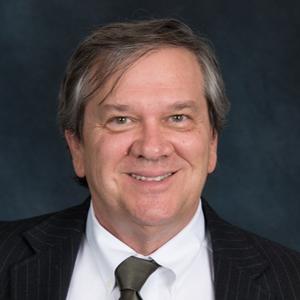
Following an undergraduate degree at the University of Puget Sound in 1974 and graduate work at Caltech, Tony Rappe came to CSU in 1981. Over the years, he has taught 23 different courses, mentored 19 undergraduates, 20 graduate students, and 7 postdocs. He has had 16 industrial/government lab collaborators and published with 23 academic collaborators. Over the years, his research has focused on organometallic reaction mechanisms, polymerization catalysis, magnetism, and force field development.
Dr. Rappe served as Chemistry Department Chair from 2003 to 2009, was on the University’s Sustainability committee/commission from 2007 to 2022, served on the founding steering committee for the Clean Energy Supercluster from 2006-2013, and was on the ISTeC management and allocations committee from 2015 to 2022.