Seminar Categories
All Upcoming

10/13/26 at 4:00pm in Chemistry A101
Seminar Abstract: Binary metal selenides are of increasing interest due to their wide range of applications in thermoelectrics, optoelectronics, energy storage, etc. However, inorganic syntheses for binary metal chalcogenides, i.e. solid state or colloidal methods, remain elusive in their reaction kinetics and phase selectivity. However, we can begin to understand reaction mechanisms through the trackable […]
10/13/26 at 4:00pm in Chemistry A101
Seminar Abstract: Calcium metal’s abundance and electrochemical properties motivate research towards its use in secondary batteries. Due to passivation of the metal in common battery salts and solvents, there is a need for new electrolytes which create an interphase that is electronically insulating in the voltage window of the battery, but ionically conductive. The seminar […]
10/20/26 at 4:00pm in Chemistry A101
Seminar Abstract: Lithium-sulfur batteries hold great promise due to sulfur’s high abundance and theoretical capacity; however, Li-S batteries undergo the formation of soluble polysulfide intermediates which can lead to sulfur depletion and ultimately cell death. Sulfurized polymers like sulfurized polyacrylonitrile, SPAN, can be used to mitigate this problem, but SPAN cathodes experience a drop in […]
10/20/26 at 4:00pm in Chemistry A101
Seminar Abstract: Iron complexes are promising alternatives to precious-metal photosensitizers, but rapid excited-state relaxation often limits their reactivity. This seminar will discuss a recent study that combines ligand design and organization within micelles to promote electron transfer from a short-lived upper excited state of an iron(II) complex. Spectroscopic and electrochemical evidence for this pathway will […]
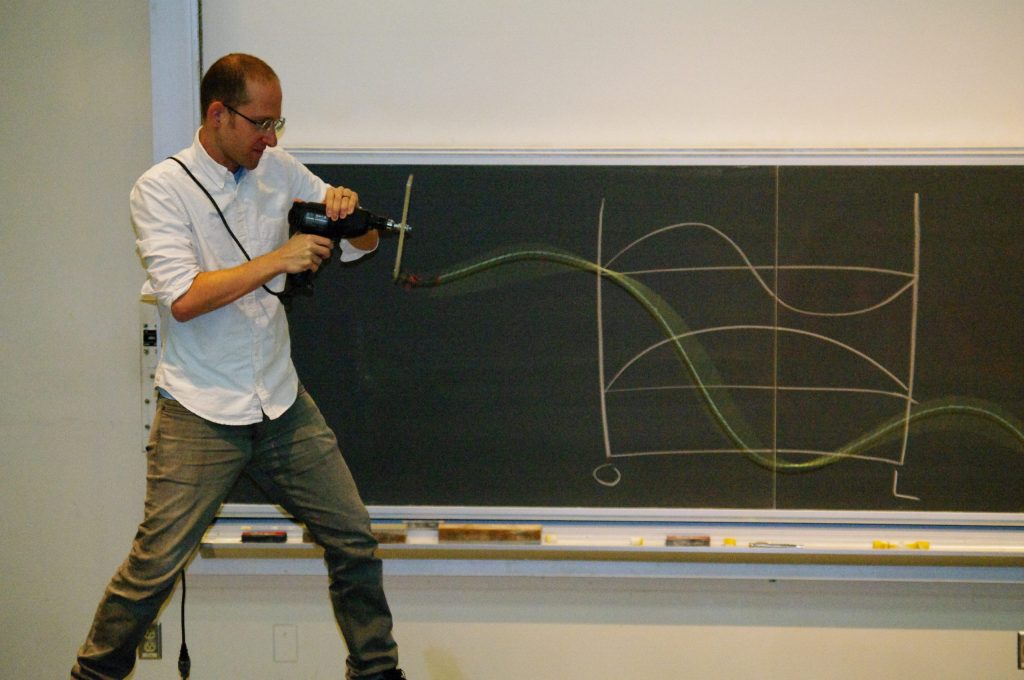
10/22/26 at 4:00pm in Chemistry A101
Seminar Abstract: Photonic structures offer the ability to fundamentally alter how light interacts with matter. I will tell several stories of how these abilities can be leveraged for new ways to perform measurements on single molecules. In one story, I will show how the increased light-molecule interactions in high-finesse fiber Fabry-Pérot microcavities can be used […]
10/27/26 at 4:00pm in Chemistry A101
Seminar Abstract: The catalytic activity of late metal imido and oxo complexes is commonly associated with two electron atom/group transfer reactions. We have found that the strongly donating bis(carbene)borate ligand platform expands the scope of iron imido and oxo chemistry, leading to new roles for these ligands in catalysis. In one example, the high spin […]


11/2/26 at 4:00pm in Chemistry A101
Seminar Abstract: Previously, we reported that the addition of catalytic quantities of cobalt(II) complexes to standard methacrylate-based formulations were found to reduce the crosslinking density, glass transition temperature, modulus and stiffness of the resultant photopolymeric materials proportional to catalyst loading. We have dubbed this technique catalytic chain transfer photopolymerization (CCTP2). Expansion of this technology, however, […]
11/12/26 at 4:00pm in Chemistry A101
Seminar Abstract: Photoexcitation can convert photon energy into chemically and electrically functional states, such as proton-released ionic species, charge-separated states, and mobile free carriers. Understanding how these states form and evolve is key to designing molecular and hybrid materials for photochemical and optoelectronic applications. In this talk, I will present our time-resolved spectroscopic studies on […]
2/15/27 at 4:00pm in Chemistry A101

2/23/27 at 4:00pm in Chemistry A101
Seminar Abstract: Transition metal catalysis has revolutionized chemical synthesis. Reactions such as metal-catalyzed cross coupling, asymmetric hydrogenation and C–H functionaliza-tion have changed the way chemists approach bond constructions and ultimately expand molecular space. Historically, these reactions are catalyzed by closed-shell precious metal complexes that undergo predictable and reliable two-electron redox changes. The increased emphasis on […]
Most Recent Past Seminars

10/7/26 at 4:00pm in Chemistry A101
About the seminar: Accurate evaluation of gunshot residue (GSR) evidence in criminal investigations requires a deep understanding of its deposition, transfer, and persistence. This seminar presents research from West Virginia University on modernizing GSR examinations. The studies demonstrate how traditional SEM-EDS analysis is complemented by modern analytical techniques—including laser-induced breakdown spectroscopy (LIBS), electrochemical sensors, and […]
10/6/26 at 4:00pm in Chemistry A101
Seminar Abstract: Discovery of competitive permanent magnet (PM) materials requires a more comprehensive understanding of how to tune magnetic properties. To develop materials with comparable performance to rare-earth-based PMs, magneto-crystalline anisotropy must be understood not only in 4f systems, but also in 3d transition metals. McGuire et Al. successfully enhanced the magneto-crystalline anisotropy in hexagonal Fe3Ge […]
10/6/26 at 4:00pm in Chemistry A101
Seminar Abstract: Relative to the number of metal carbodiimides reported in literature, very few are known to demonstrate polymorphism. This relatively underexplored aspect of metal carbodiimide synthesis is, in part, limited due to lack of a predictive model to determine which crystal systems may exhibit polymorphism. Measuring theoretical structural complexity can be accomplished by hand […]
10/2/26 at 4:00pm in Chemistry A101
About the seminar: This proposed project aims to develop a new form of memory resistor (memristor) using the spinodal decomposition of V1-xTixO2. Memristors are poised to reduce the energy consumption of artificial intelligence models by modeling neurons in living things and bringing memory onto the CPU. This reduces the need to transfer information between the […]
10/1/26 at 4:00pm in Chemistry A101
Seminar Abstract: My research group develops optical and electrochemical approaches to uncover how local structure, composition, and electronic properties govern charge transport and reactivity in energy conversion and storage materials. In the first part of this talk, I will highlight our spatially resolved studies of solar energy conversion materials, including photoelectrochemical imaging of transition metal […]
9/30/26 at 4:00pm in Chemistry A101
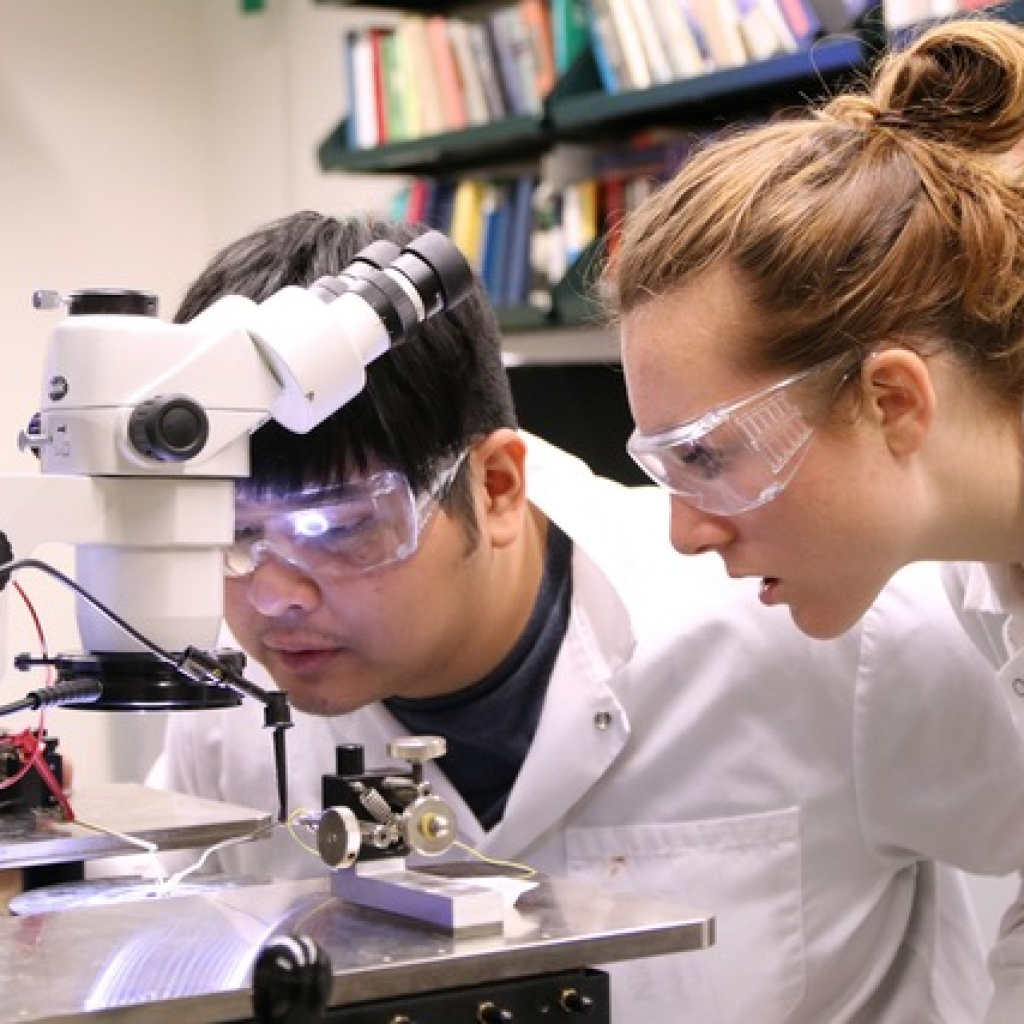
Join alumni of the UO’s Knight Campus Graduate Internship Program to learn how you can get a master’s degree and launch your career in industry. This accelerated program combines concentrated lab and course work with professional development and the opportunity to land a paid 9-month internship in industry, academia, national lab or research institute. Launch your career […]
9/29/26 at 4:00pm in Chemistry A101
About the seminar: The development of the next generation of functional materials, including optoelectronic devices, stimuli-responsive catalysts, separation platforms, and on-demand drug delivery platforms with tailorable properties, relies on rapid switching between two or more distinct forms in bulk solids. The current benchmark in the field of stimuli-responsive materials has previously achieved solution-like photoisomerization kinetics […]
9/9/26 at 2:00 PM in Chemistry B201/Teams
https://teams.microsoft.com/meet/228317523543925?p=0G5rliA3pR8RlOgmhJ