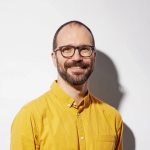
Speaker
Joost de Gouw, Ph.D.
Speaker's Institution
CU Boulder
Date
2026-04-01
Time
4:00pm
Location
Chemistry A101
Mixer Time
3:45pm
Mixer Time
Chemistry B101E
Calendar (ICS) Event
Additional Information
Seminar Abstract:
The increased intensity of wildfires in the American West has halted the progress made in improving air quality. For example, surface ozone and PM2.5 decreased for many years across the West, but these trends have stopped or have even reversed. Another major emerging issue is the occurrence of urban fires as happened in Colorado (Marshall Fire), Hawaii (Lahaina Fire) and California () in just the last few years. In my presentation, I will summarize our group’s work on wildfires. We made measurements of air pollutants after the Marshall Fire both inside smoke-impacted homes as well as outside from a mobile laboratory. One issue with urban fires is that the burnt structures contain many man-made materials. We have studied the emissions from the burning of such materials in the lab, and used the results in the interpretation of our field measurements. Finally, I will discuss how satellite data hold information on the phase of a wildfire (flaming vs. smoldering) and how this information can be used in improved ozone forecasts.
Speaker Bio:
Joost de Gouw is a Professor and Chair of the Chemistry Department of the University of Colorado Boulder, and a Fellow in the Cooperative Institute for Research in Environmental Sciences (CIRES). He earned a PhD in Physics from the University of Utrecht in 1994 and worked from 2001 through 2017 as a Research Scientist with the NOAA Earth System Research Laboratory. Joost de Gouw’s research interests include the sources and chemical reactions of organic compounds and related air pollutants in the atmosphere, and how these processes impact air quality and climate. His research group uses mass spectrometry, gas chromatography and data from satellite remote sensing instruments in their work. Joost de Gouw was a co-recipient of the Colorado Governor’s Award for High-Impact Research in 2012, 2014 and 2022, was a Web of Science Highly Cited Researcher in 2017 and 2018, and was elected a Fellow of the American Geophysical Union in 2020.