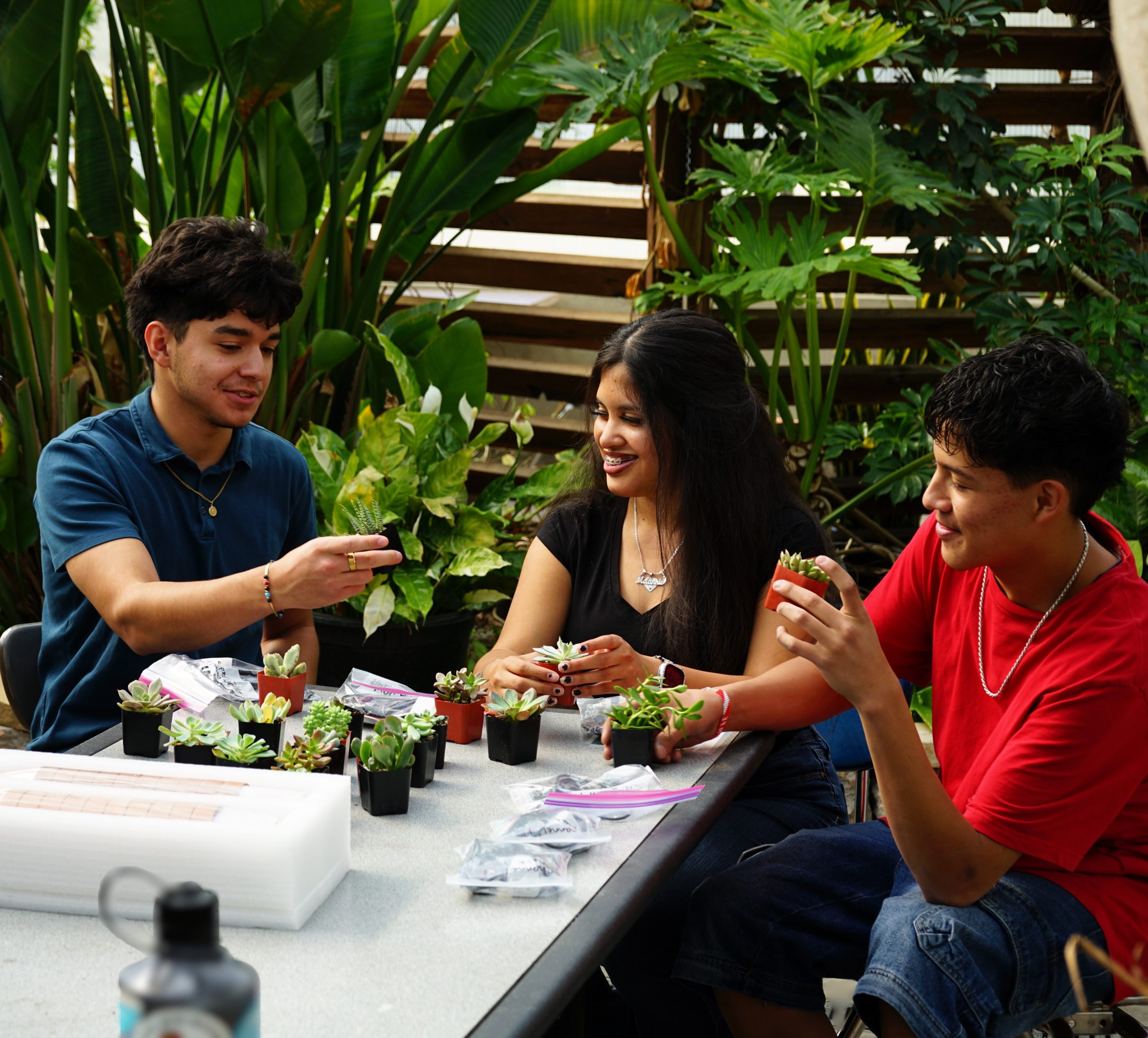
Katelyn Richard, grad student, hosted her second IMAGINATES event in collaboration with the Poudre Library District. Last year, the visiting students toured the Chemistry building and spent their day in different labs ending with a hands on experiment. This year the students spent the day hands on learning and doing various experiments in CSU’s Plant Growth Facilities greenhouse.
Katelyn took the time to further discuss the IMAGINATES day and the continued importance of these programs within the community
Question: What are the differences you noticed between this year’s IMAGINATES and last year’s?
Answer: Last year, we noticed that the kids were most energized and involved when we did the hands-on experiment at the end of the day, so we decided to make that the focus this year. Instead of showing students what STEM careers look like at the graduate level by touring our lab spaces, we conducted exciting and relevant experiments together.
Q: What made you decide to hold the event in the CSU greenhouse this year?
A: We wanted to host the event in the greenhouse because it is a beautiful, large space where the students were surrounded by plants they could interact with and learn about. Tammy Brenner, the manager of that space, was kind enough to let us use the space so that we could spread out the three science stations and still all be in the same space.
Q: Can you explain the chemistry behind the experiments you and the students did this year?
A: Chlorophyll glows because it absorbs energy from light. This energy is usually used towards photosynthesis in a plant, but when it is not used, it instead releases that energy in the form of fluorescence.
Flowers contain brightly colored chemicals that can be extracted and used for dyes. We then added lemon juice to increase acidity or baking soda to decrease acidity. As the pH changes, the flower pigment molecules change shape, which, in turn, changes the color of the dye (typically more acidic, brighter color).
Q: Why is it so important that students get introduced to STEM in middle school and high school?
A: It is important that kids have the opportunity to meet and interact with people who work in STEM so they see the expanse of opportunities that they may not have been aware of otherwise. Growing up, I was fascinated by the natural world, but I did not know anyone who worked in environmental sciences. It wasn’t until undergrad that I learned about environmental sciences. And further, it was not until graduate school that I realized that I wanted to pursue a career in environmental (and specifically atmospheric) chemistry. I want to give students STEM experiences early on so that they might realize what it is that they really care about and want to do for work earlier on.
Q: What is the value of the hands-on element in this event?
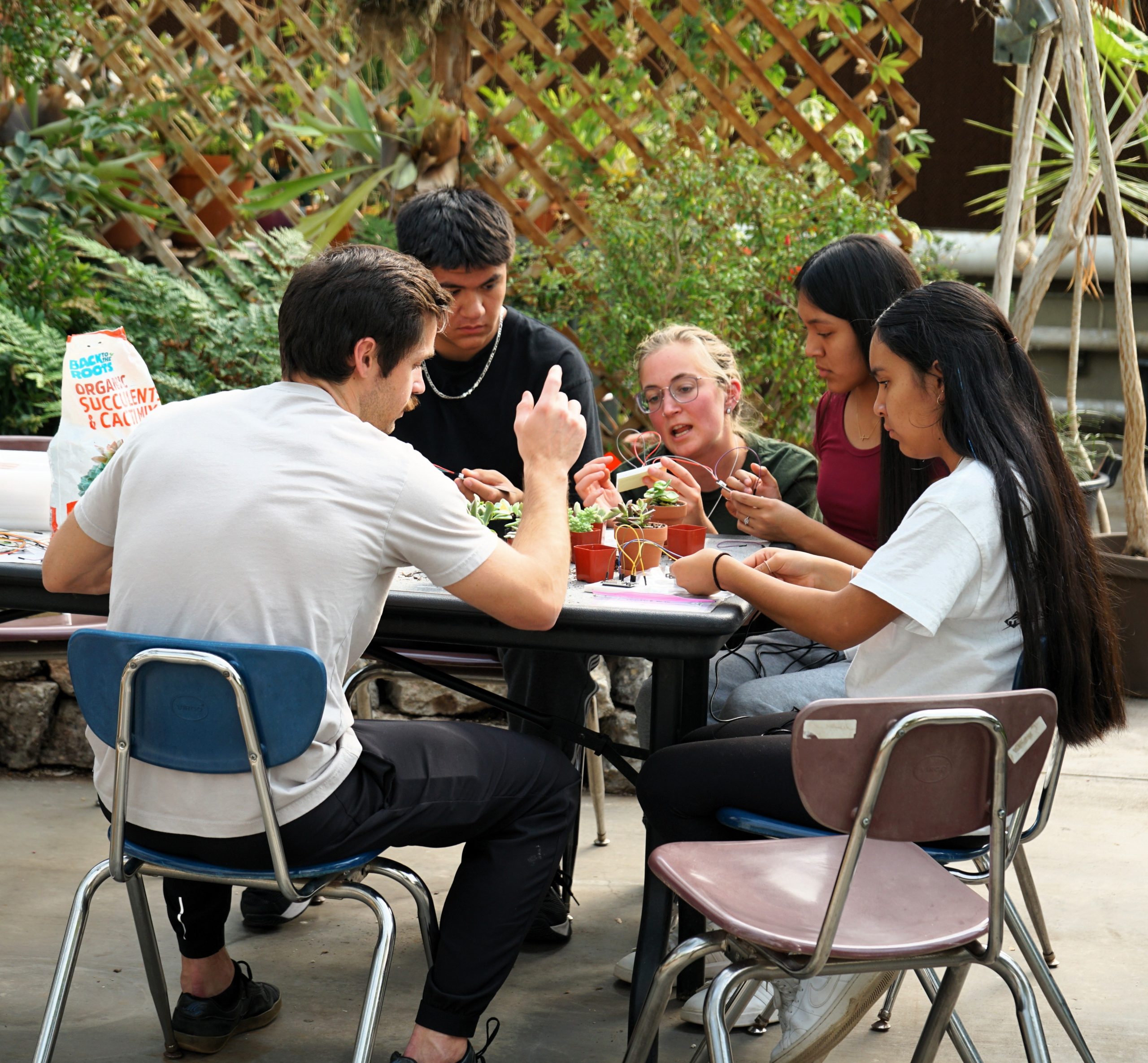
A: Hands-on activities give the students the power and control to learn what they want at their own pace. It leaves space to learn from mistakes, explore what you’re curious about and ask questions as they come up. I wanted to show students that they are capable of making, creating and conducting science- they made soil moisture sensors, extracted chlorophyll from plants, and made plant dyes on their own! Hopefully they left feeling curious, excited and empowered to experiment.