About the Seminar:
The Nacsa Group uses electron transfer techniques to address challenges in organic synthesis. Our lab works in two main areas. The first uses electrochemistry to develop new approaches for dehydration reactions, such as the synthesis of amides and esters from carboxylic acids, with an emphasis on catalysis. Dehydrative transformations are workhorse operations in pharmaceutical R&D, but owing to the wasteful reagents overwhelmingly used to accomplish them, industry has long called for methods that avoid these reagents. We have identified new electrochemical strategies for the substitution of carboxylic acids that meet these demands. Our second program leverages radical-mediated migration events, usually initiated by photoinduced electron transfer, as key design elements in complexity-generating transformations. We have shown that olefin difunctionalizations underpinned by this approach can access product classes and achieve stereoselectivities that have otherwise proven challenging or impossible. More recently, we have discovered conceptually novel and synthetically enabling methods for the amination of aromatics and the stereoselective a-functionalization of carbonyls.
About the Speaker:
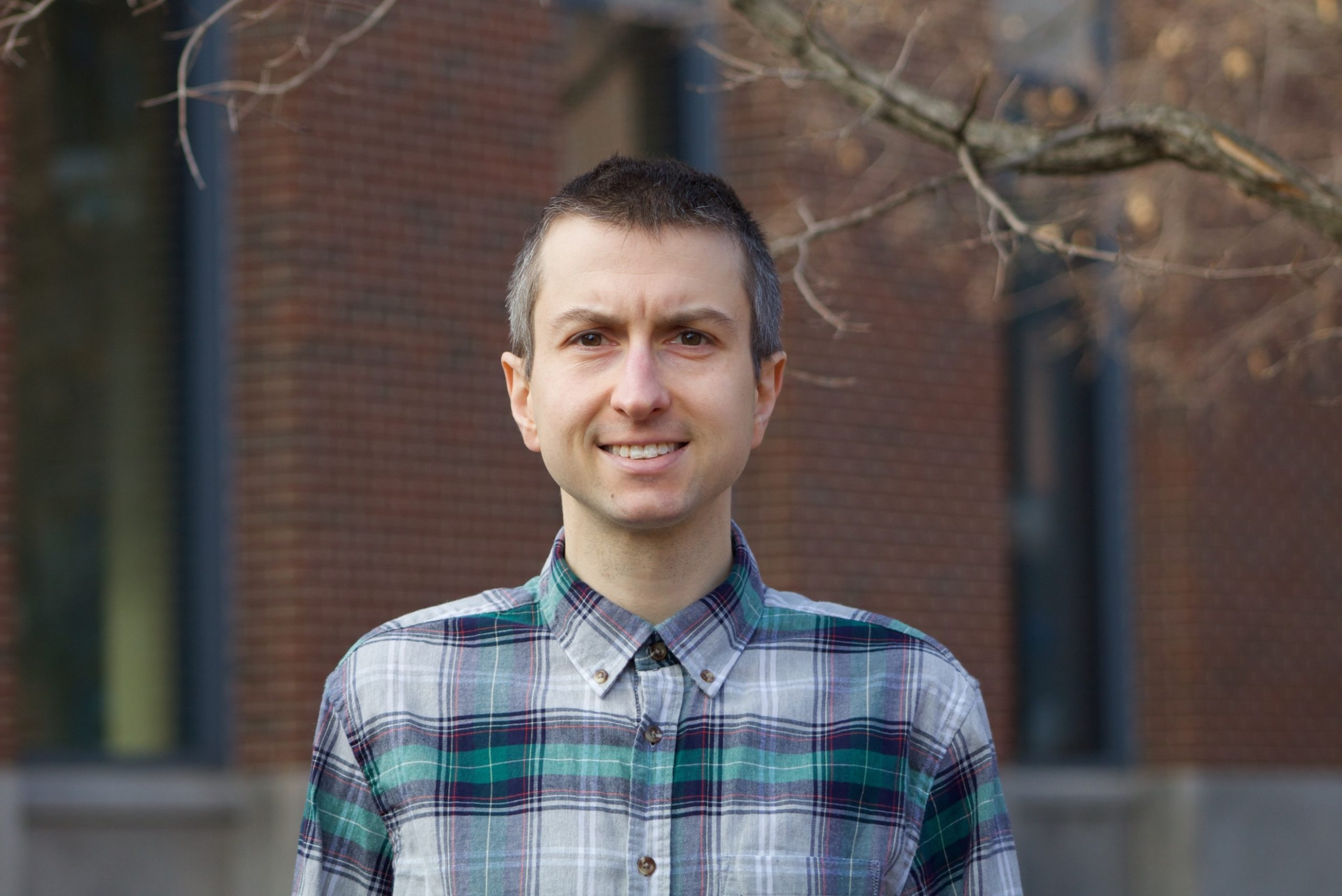
Eric was born in Toronto, Ontario, Canada, and grew up nearby in Kingston, Ontario. He graduated with a BSc in Chemistry from Harvey Mudd College in Claremont, CA in 2010, where he worked on the total synthesis of sesquiterpene natural products. He received a PhD from Columbia University in 2015, studying synthetic applications of aromatic ions with Tristan Lambert. He finished his training with David MacMillan at Princeton University as an NIH postdoctoral fellow developing light-promoted asymmetric transformations. Eric began his independent career at Penn State University in 2019. His lab develops new synthetic methods and has received ACS PRF, NSF CAREER, and NIH R35 awards.