Seminar Abstract:
Transformations of common molecular building blocks can broadly impact chemical synthesis in contexts ranging from the discovery of medicinally relevant small molecules to industrial-scale chemical production. This lecture will describe our efforts in harnessing new modes of reactivity in radical chemistry and organometallic catalysis to streamline the syntheses of diverse small molecules. First, our efforts applying the unique reactivity of amidyl radicals for the derivatization of several classes of organic substrates will be presented. In addition, our work in developing catalytic hydrocarbonylations of unsaturated substrates using earth-abundant cobalt and visible light will be discussed.
Speaker Bio:
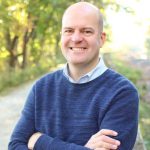
Erik received his A. B. degree from Harvard University in 2001. During his undergraduate education, he performed research with Prof. Amir Hoveyda at Boston College focusing on enantioselective alkene metathesis. Erik continued his studies at The Scripps Research Institute in the laboratory of Prof. Erik Sorensen, moving to Princeton University before receiving his Ph. D. degree in 2006. His doctoral training involved the total synthesis of the furanosteroid viridin and the development of a palladium-catalyzed alkene aminoacetoxylation. Erik’s postdoctoral work with Prof. John Hartwig at the University of Illinois centered on synthetic and mechanistic studies of transition metal enolates. Erik enthusiastically joined the Chemistry Department faculty at UNC Chapel Hill in 2008 and was promoted to Professor of Chemistry in 2019. The Alexanian group focuses on the development of enabling reaction methods in chemical synthesis. These projects aim to address important challenges facing society, ranging from the sustainable synthesis of small molecules to treat human disease, to the upcycling of post-consumer plastic waste. A primary focus is the development of radical-mediated functionalizations of small molecules and polymers that unlock new strategies in chemical synthesis. We also pursue the development of new modes of reactivity in transition metal catalysis, with an emphasis on the use of common molecular feedstocks and earth-abundant first-row catalysts.