About the seminar:
Surfaces and interfaces play a crucial role in chemical and physical phenomena, such as heterogeneous catalysis and reactions. At the surface or interface of water, the hydrogen-bonded network is abruptly interrupted, giving rise to fascinating interfacial properties. These specific properties are the driving forces for many biochemical, environmental and geochemical processes. Here, I will discuss our recent work probing interfacial molecules of two relevant aqueous interfaces: the surface behavior of perfluorinated pollutants and adsorption of small organic molecules on ice surfaces, utilizing surface-specific sum frequency generation spectroscopy. These molecular-level insights can inform the rational design of remediation technologies as well as knowledge of the fate and transport of environmental pollutants
About the speaker:
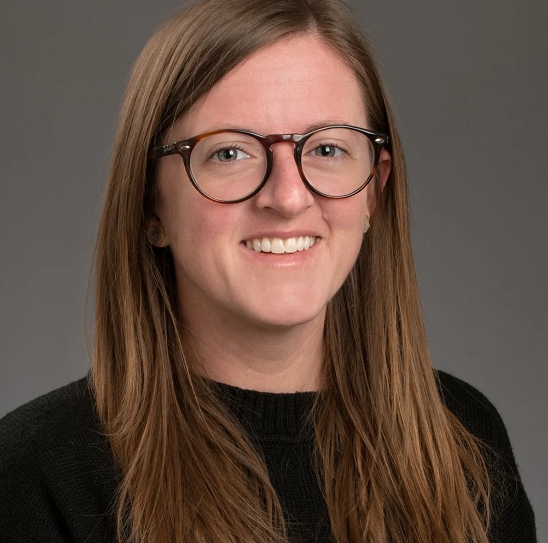
Jenée Cyran received her B.S. degree in Chemistry from Allegheny College in Pennsylvania. She earned her PhD in 2015 from Colorado State University in the group of Amber Krummel. She was an Alexander von Humboldt postdoctoral fellow in the Molecular Spectroscopy Department at the Max Planck Institute for Polymer Research (MPIP) in Mainz, Germany. Currently, she is an assistant professor at Boise State University where her research is focused using nonlinear spectroscopy to probe interfacial structure and dynamics of aqueous interfaces.