Seminar Abstract:
Poly(vinyl chloride) (PVC) is the third-most mass-produced polymer, with applications ranging from long-term construction to disposable medical application. However, this polymer has the most harmful end-of-life to the environment. Regardless of if PVC items end up in a landfill or recycling stream, thermal and photochemical degradation cause harmful production of hydrochloric acid, dioxins and leaching of toxic additives. While many polymers can be pyrolyzed to smaller hydrocarbon reagents, the HCl release, which is 58 wt% of PVC, complicates the process. This problem requires removal of chlorine from PVC without the production of corrosive byproducts, while leaving behind an organic product and Cl-containing product that have use and value. Discussed herein are some of the first catalytic routes to full and controlled partial dechlorination of PVC to yield selective polymer products and benign chlorinated products under mild conditions. Two strategies have been realized to promote dechlorination of PVC. Metal catalysis with sodium formate can show full dechlorination with minimal branching in the polyethylene-like product. Alternatively, silylium catalysis can show partial and full dechlorination to synthesize a range of products.
Speaker Bio:
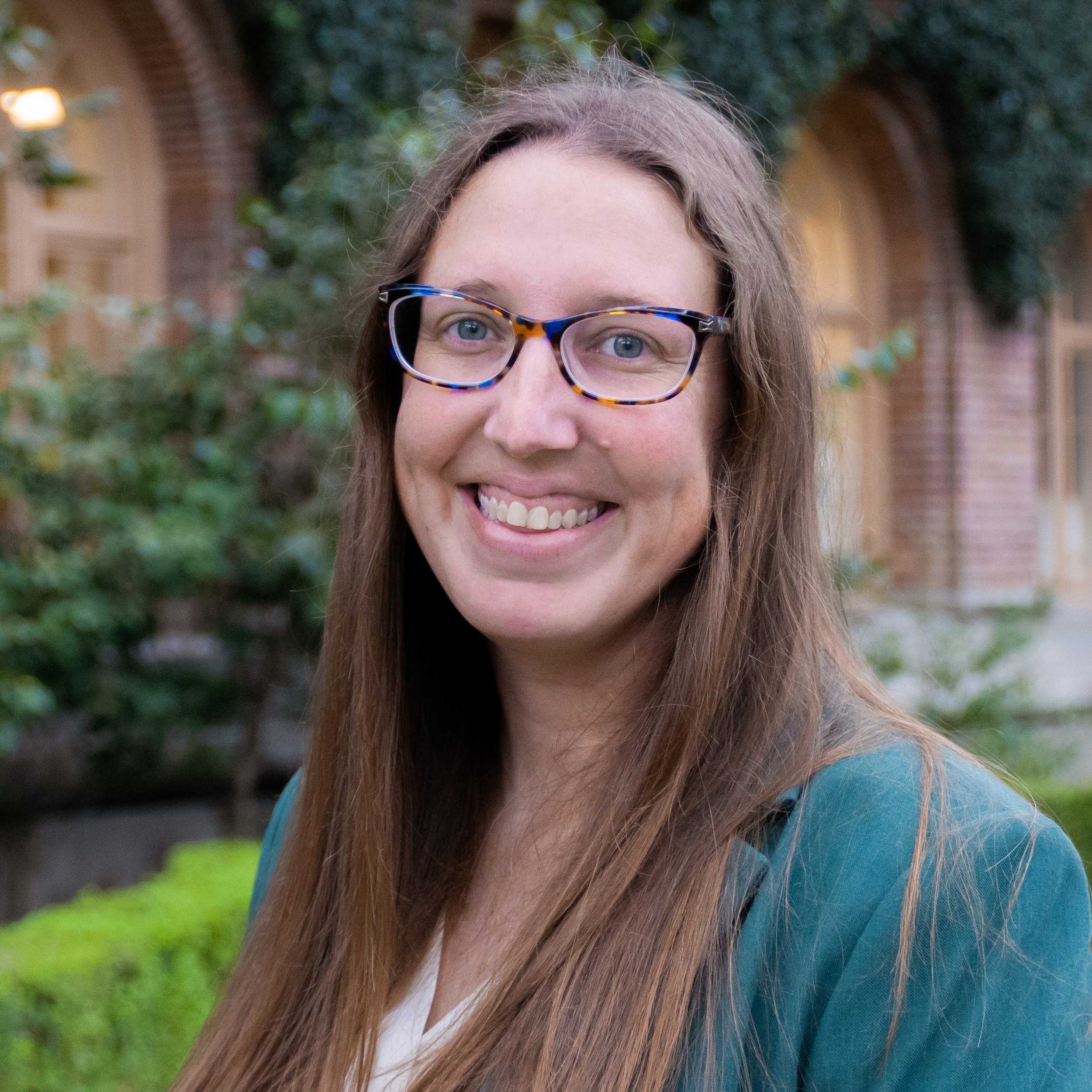
Megan received a B.A. in chemistry at Washington University in St. Louis. She went on to earn her Ph.D. in chemistry from the University of California, Irvine, working with Bill Evans on the “Spectroscopic and Computational Analysis of Rare Earth and Actinide Complexes in Unusual Coordination Environments and Oxidation States”. She then moved to pursue postdoctoral studies with Prof. Bill Tolman at the University of Minnesota within the NSF Center for Sustainable Polymers. There she collaborated with Prof. Geoff Coates and Prof. Chris Cramer on mechanistic studies of the perfectly alternating copolymerization of epoxides and cyclic anhydrides with an aluminum catalyst and PPNCl co-catalyst. Megan started as a Gabilan Assistant Professor of Chemistry at the University of Southern California in 2018. She has built a research program in catalysis to address polymer sustainability. She was promoted to Associate Professor in 2026. Her research program prioritizes molecular inorganic chemistry and polymer chemistry, often combined, to address challenges in sustainability.