Speaker
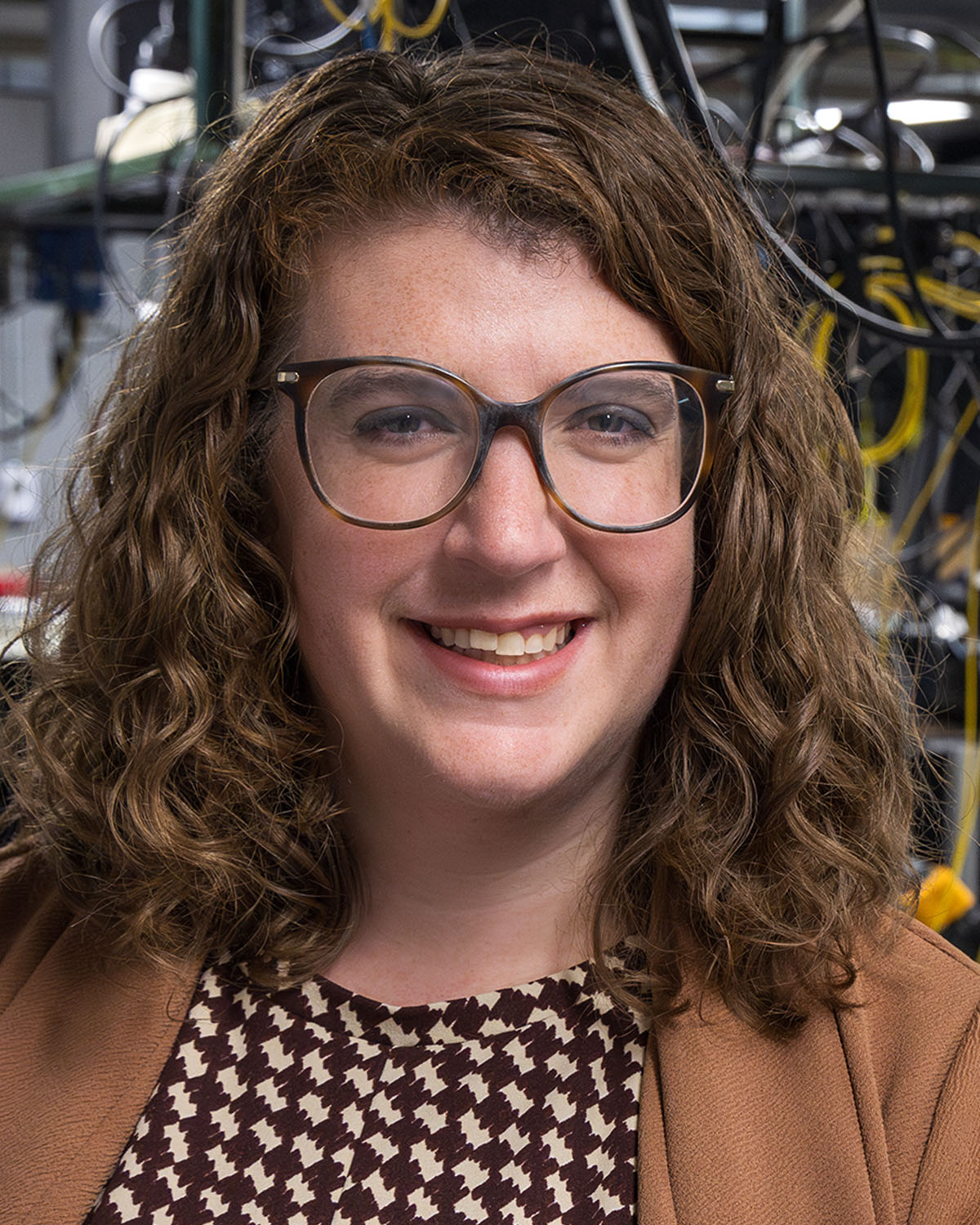
Victoria Barber, Ph.D.
Speaker's Institution
UCLA
Date
2026-11-04
Time
4:00pm
Location
Chemistry A101
Mixer Time
3:45pm
Mixer Time
Chemistry B101E
Calendar (ICS) Event
Additional Information
Seminar Abstract:
latile organic compounds (VOCs) are emitted into air from diverse biogenic and anthropogenic sources including direct emission from plants, fossil fuel combustion, industrial processes, and wildfires. They are present in the air we breathe in minute concentrations, but exert an outsized impact on atmospheric composition, air quality, and climate. VOCs themselves can be toxic, but their most widespread consequences come about through their chemistry; oxidation chemistry in the atmosphere leads to the production of tropospheric ozone, a deadly and highly regulated pollutant, secondary organic aerosol, a key component in atmospheric particulate matter with deleterious effects on health and a complex influence on global climate, and CO2, the most important atmospheric climate forcer. Both the composition of the suite of VOCs in the atmosphere, and the downstream reaction networks that govern their evolution in air, are highly complex, and remain uncertain. My research group leverages advanced instrumentation, mechanistic models, and controlled laboratory experiments to unravel the composition of organics in air and detail the mechanisms that govern their evolution. VOC oxidation networks proceed through a series of reactive intermediates: short lived species that act as the key branch points in these networks and ultimately determine product distributions. The peroxy radical, RO2, is arguably the most important branch point in these oxidation networks, with a fate that depends on both the structure of the RO2 and on local reactivity conditions. In laboratory experiments, not all RO2 fates that are important in the atmosphere are equally accessible. Thus, parts of reactivity space remain underexplored, leaving gaps in our mechanistic understanding and making it impossible to correctly account for the effects of RO2 chemistry on atmospheric composition in models. My group has developed a new approach to laboratory studies of RO2 chemistry, leveraging alkyl iodide photolysis as a means to produce RO2 in an environmental chamber in the absence of an oxidant source. This affords greater control over RO2 fate than traditional, oxidant-initiated experiments, and permits access to previously unexplored areas of RO2 chemical space. We demonstrate that existing mechanistic descriptions fail under these unexplored reactivity regimes, even for simple, prototypical RO2. Conditions that access mixed RO2 fates lead to unexpected products, stymie existing mechanistic explanations, and point towards the critical role that poorly-constrained RO2 cross-reactions play in determining product distributions. In separate work, we take our instrumentation out of the lab and into the world, measuring ambient air composition at UCLA in the immediate aftermath of the unprecedented Palisades and Eaton wildfires of January 2025. The result is a one-of-a-kind dataset that begins to unravel the impacts that wildland-urban interface (WUI) fires exert in urban air, providing information beyond what we can glean from regulatory monitors on the air quality impacts of such events. Related ongoing work is focused on understanding the impacts of smoke on indoor air quality and human health. This work spans atmospheric organic chemistry across scales; from fundamental chemical mechanisms to real-world atmospheric complexity, enabling a more predictive understanding of how reactive organic chemistry shapes the air we breathe.
Speaker Bio:
Victoria Barber is an Assistant Professor at UCLA in the Department of Chemistry and Biochemistry, with a courtesy appointment in and the Department of Atmospheric and Oceanic Sciences. She earned her B.A. in Chemistry from Swarthmore College and her Ph.D. in Physical Chemistry from the University of Pennsylvania, where she worked with Marsha Lester on the spectroscopy and dynamics of Criegee intermediates. As a postdoctoral associate at MIT with Jesse Kroll, she studied peroxy and alkoxy radical chemistry and the effects of air cleaning technologies on indoor air quality. Her group at UCLA takes a molecular approach to understanding the organic chemistry of outdoor and indoor air, with a particular focus on the chemical mechanisms that govern the oxidation of VOCs in the atmosphere.